Every fade is built from two choices: how high it starts on the head, and how it finishes at the bottom. Once you know both, you can describe almost any fade in two words — "low taper," "high skin," "mid burst" — and a barber will know exactly what you mean.
Low fade. Starts just above the ears, close to the hairline. The most subtle option and the safest bet for work or a conservative setting — short, but it doesn't scream "new haircut."
Mid fade. Starts around temple height. The most requested fade for a reason: enough contrast to look sharp, not so much that it's the first thing anyone notices.
High fade. Starts well above the ears, sometimes close to the top of the head. The most dramatic contrast between the sides and the top — a bold, current look rather than a quiet one.
Skin fade (bald fade). Any of the above, but taken all the way down to bare skin at the bottom. The sharpest possible line between hair and no hair.
Taper fade. The gentler alternative to a skin fade — hair gets shorter but never disappears completely at the bottom. Softer, more classic, and often what people mean by "just clean it up on the sides" without wanting anything flashy.
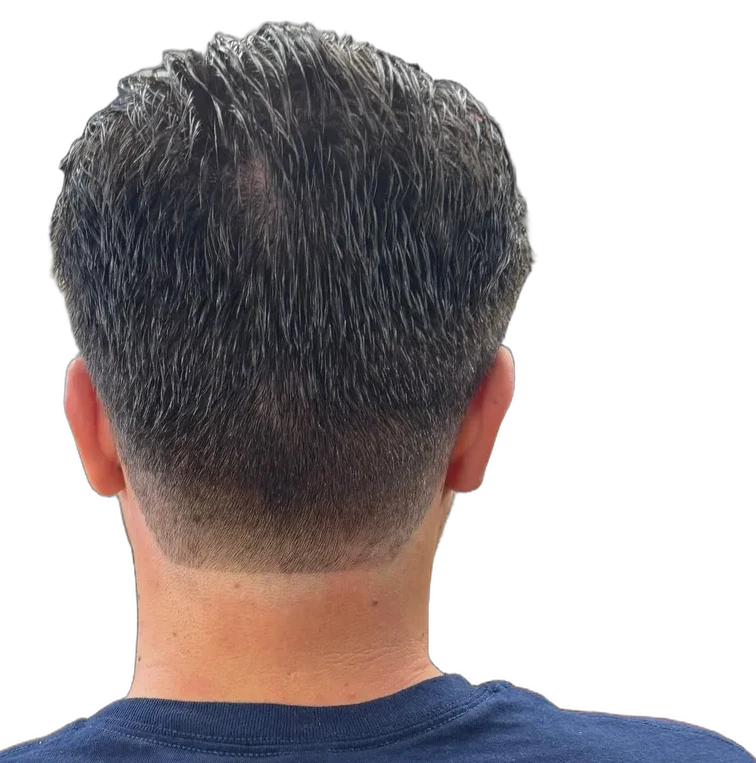
Burst fade. Fades in a rounded arc around the ear instead of running in a straight line across the side. Common with longer, curlier, or textured tops, since it follows the shape of the head rather than cutting across it.
Drop fade. The fade line curves — "drops" — down behind the ear instead of staying level. Works especially well with curly and coily hair, where a straight fade line can look unnatural against the curl pattern.
Temple fade. A shorter fade focused just around the temples, usually paired with a fuller, natural top. Less about total contrast, more about cleaning up the edges.
A fade on the sides is also one of the simplest ways to balance out thinning hair on top — see our guide on best haircuts for thinning hair for the full breakdown.
If you're not sure which to ask for, "low" or "mid" with a "taper" finish is the safest starting point — easy to describe, hard to get wrong, and simple to go shorter or bolder from on your next visit once you know what you like. For more on putting it into words, see our guide on how to describe the haircut you want.